-
-
-
Line No. 03 Nandu Farm Geeta Nagar Haridwar Road Rishikesh
Rishikesh
Rishikesh - Rishikesh Tourism
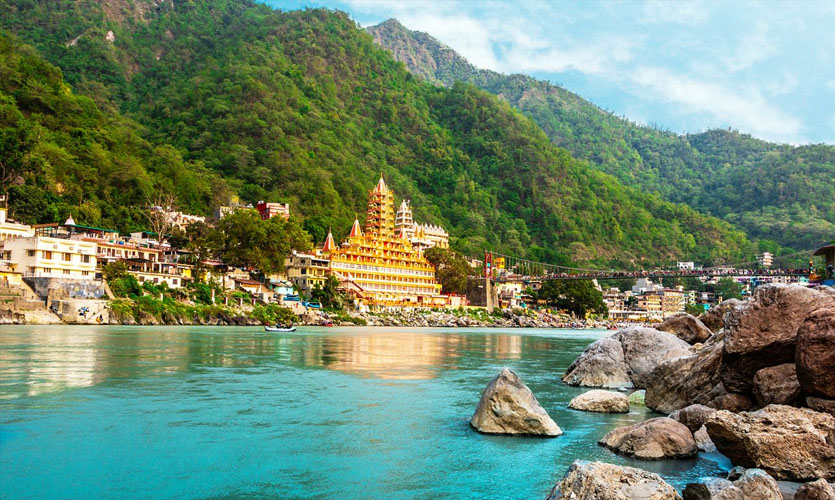
Rishikesh: Where the River Whispers and the Mountains Sing
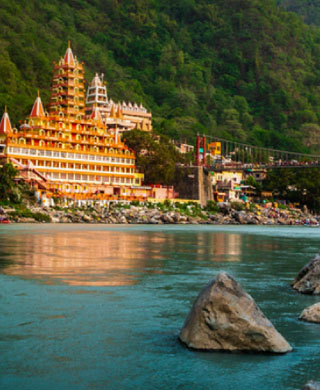
Nestled in the Himalayan foothills, cradled by the emerald embrace of forested hills and cradling the swift, silver flow of the Ganges, lies Rishikesh. To call it a town feels insufficient, reductive. It is more accurately a sensation—a confluence of spirit, nature, and timeless energy that has drawn seekers, sages, and, more recently, soul-searching travelers for millennia. This is not just a destination on a map; it is a destination for the heart.
The first thing that strikes you is the air. It carries a unique fragrance—a clean, mineral scent of river mist mingled with the faint, sweet smoke of sandalwood incense and the earthy aroma of damp soil from the surrounding Shivalik ranges. It is air that feels deliberately inhaled, as if the very atmosphere encourages you to breathe deeper, to slow down. The constant, resonant soundtrack is the river: not a gentle babble, but a powerful, churning rush. The Ganga here is youthful, vigorous, having just descended from her glacial source. She is not yet the wide, placid mother of the plains, but a dynamic, cleansing force, her turquoise-green waters swirling around massive boulders and carving through the landscape with purposeful energy.
The Spine of Spirit Rishikesh : Lakshman Jhula and Ram Jhula
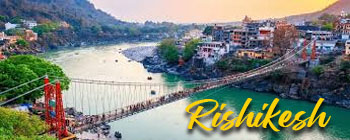
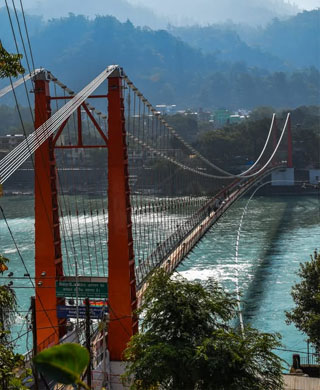
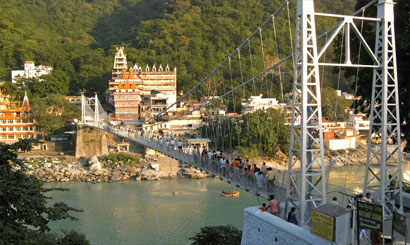
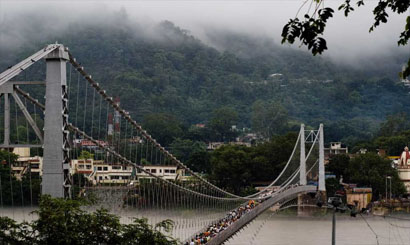
The town’s iconic symbols, the two suspension bridges—Lakshman Jhula and Ram Jhula — are more than crossings; they are living arteries. To walk across Lakshman Jhula, with its iron planks rattling gently underfoot, is to participate in a moving meditation. You are pressed amidst a vibrant tapestry: saffron-robed sadhus with matted locks and tranquil eyes, local women in bright saris carrying bundles on their heads, cows asserting their divine right of way, and wide-eyed tourists from across the globe, all moving to the shared rhythm of the river below. The views are cinematic—upstream, the river curves into a vista of endless hills; downstream, ghats and ashrams line the banks. At sunset, the iron frames cast long, geometric shadows, and the whole structure seems to glow in the warm light, a fragile thread connecting two worlds.
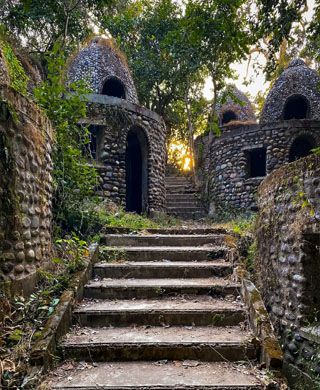
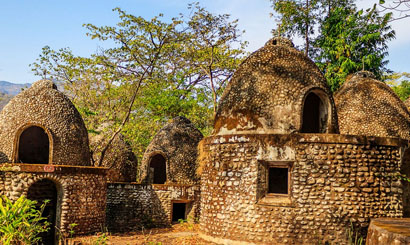
The area around these bridges forms the spiritual core. Here, ancient ashrams, some seeming to grow directly from the cliffside, stand with an aura of profound silence. The Beatles ashram, now officially the Beatles Yoga Centre within Rajaji National Park, is a fascinating paradox—a place of intense 60s nostalgia set against a backdrop of timeless asceticism. Its graffiti-covered meditation cells and silent auditoriums speak of a different kind of pilgrimage, one of pop culture finding its own nirvana.
The Rhythm of Ritual : Ganga Aarti at Triveni Ghat Rishikesh
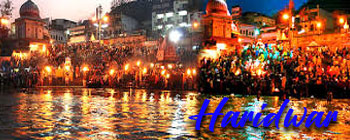
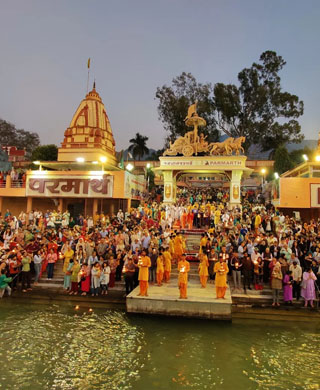
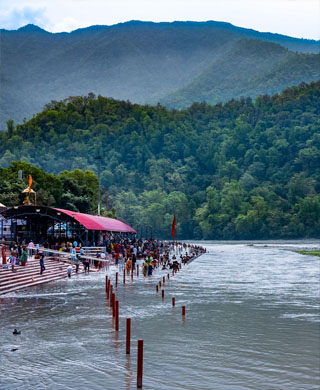
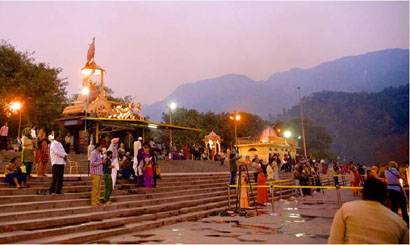
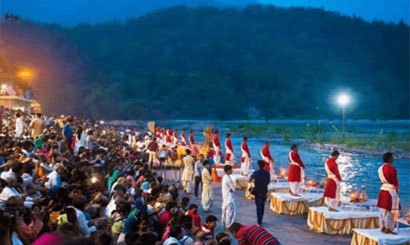
As dusk descends, the focal point shifts to Triveni Ghat. As darkness gathers, the ghat transforms. Hundreds gather on the wide steps, facing the river. Young priests in dhotis begin a synchronized choreography of fire, chanting, and bell-ringing. The air thickens with the scent of camphor and flowers. Large, ornate brass lamps are offered in sweeping circular motions to the river, their flames dancing in reflection on the black water. The chants—“Har Har Gange”—rise in a powerful, collective crescendo, not as a performance, but as a profound offering. You don’t need to understand the Sanskrit to feel it; the vibration passes through the stone steps and into your bones. It is a ritual of gratitude, a daily celebration of the sacred, and to witness it is to be granted a glimpse into the unwavering devotional heart of India.
The Inner Journey : The Yoga Capital of the World
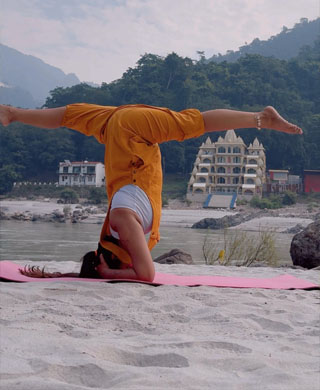
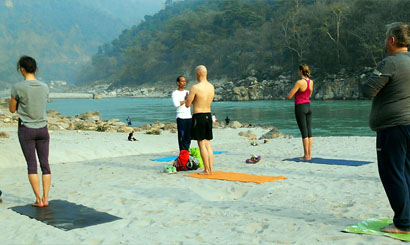
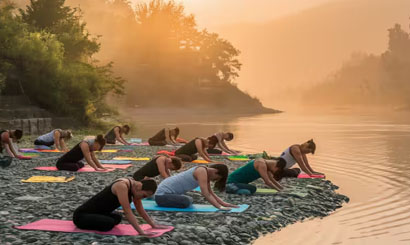
By day, Rishikesh fully embodies its title as the “Yoga Capital of the World.” The offer of inner exploration is woven into the fabric of the town. From world-renowned schools to humble rooftop classes, the practice is everywhere. At dawn, the sound of Om chanting blends with the birdsong. You see bodies stretching on ghats, balancing in hidden gardens, meditating in silent halls. This is not the competitive, acrobatic yoga of urban studios; it is traditional, rooted in Patanjali’s eight limbs, emphasizing pranayama (breath control) and dhyana (meditation) as much as asana (posture). To practice here, with the river’s roar as your drishti (focal point), is to connect to the source of the discipline itself.
The Call of the Wild : Beyond the Ashrams
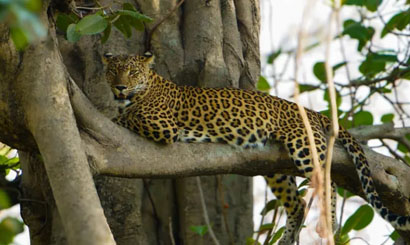
But Rishikesh is not solely an inward journey. The surrounding wilderness offers a powerful counterpoint. The forests of Rajaji National Park, a short drive away, are a reminder of the raw, untamed world that cradles this spiritual haven. Here, the silence is different—punctured by the alarm call of a langur, the rustle of a sambar deer, or, if you are immensely lucky, the distant glimpse of an elephant. The park is a vital ecosystem, a breath of untamed air.
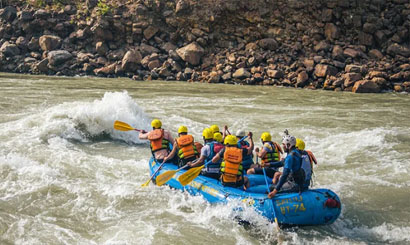
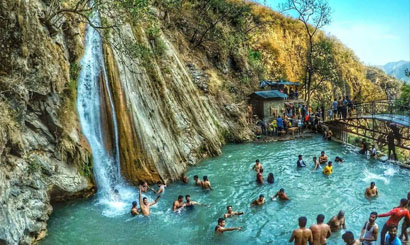
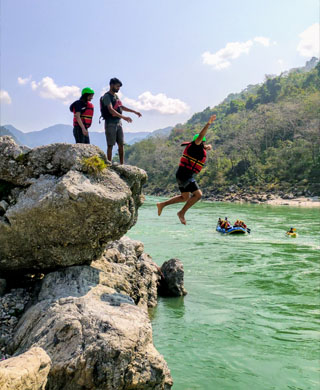
And then, there’s the adrenaline. Rishikesh is the undisputed adventure capital of North India. The same Ganga that inspires meditation also promises white-water rafting thrills. Shooting through rapids with names like “Roller Coaster” and “The Wall,” with icy spray hitting your face and the raft bouncing between towering canyon walls, is an exhilarating communion with the river’s untamable power. For the aerial minded, flying fox ziplines send you soaring over the gorge, offering a bird’s-eye view of the temple spires and river bends. The climb to Neer Garh or Patna Waterfalls, through lush trails, rewards with a cool, cascading plunge pool—a natural shower after a dusty trek.
The New Wave: Cafes, and Conscious Living
A new rhythm has emerged along the eastern bank, in areas like Swarg Ashram and Tapovan. Here, a global community has taken root, bringing with it a culture of conscious living. Bohemian cafés with names like “Little Buddha” or “The 60’s” spill onto terraces overlooking the river. They serve not just masala chai, but almond milk lattes, honey-ginger lemon tea, and lush, vibrant Buddha bowls. The menus are often vegetarian or vegan, the music is ambient or acoustic, and the conversation is a polyglot mix of philosophy, travel stories, and startup ideas. It’s a space where digital nomads code next to yoga teachers planning their next workshop, where the quest for wellness extends to smoothies and serotonin as much as to samadhi (enlightenment).
Into the Quiet : The Path Less Traveled
The true magic of Rishikesh, however, often lies in stepping away from these hubs. A walk north along the river path from Lakshman Jhula towards the quieter Parmarth Niketan ashram reveals a more contemplative pace. Small temples dot the way, and chaiwallahs offer sweet, milky tea from smoky stoves. Crossing the river on a small, pulley-operated ferry for a few rupees is a simple, quiet joy. On the western bank, the village of Jonk feels worlds away, with its rural pace and unobstructed views of the sunrise over the eastern hills.
A steep but rewarding hike up to the Kunjapuri Temple, undertaken before dawn, culminates in a 360-degree panorama of the snow-capped peaks of the Garhwal Himalayas greeting the first rays of the sun. It’s a humbling, majestic sight that frames Rishikesh in its true context: a sacred valley held in the palm of the mountains.
Taxi Packages from Rishikesh